The Engine Behind Cell and Gene Therapy Innovation
Research


Topics
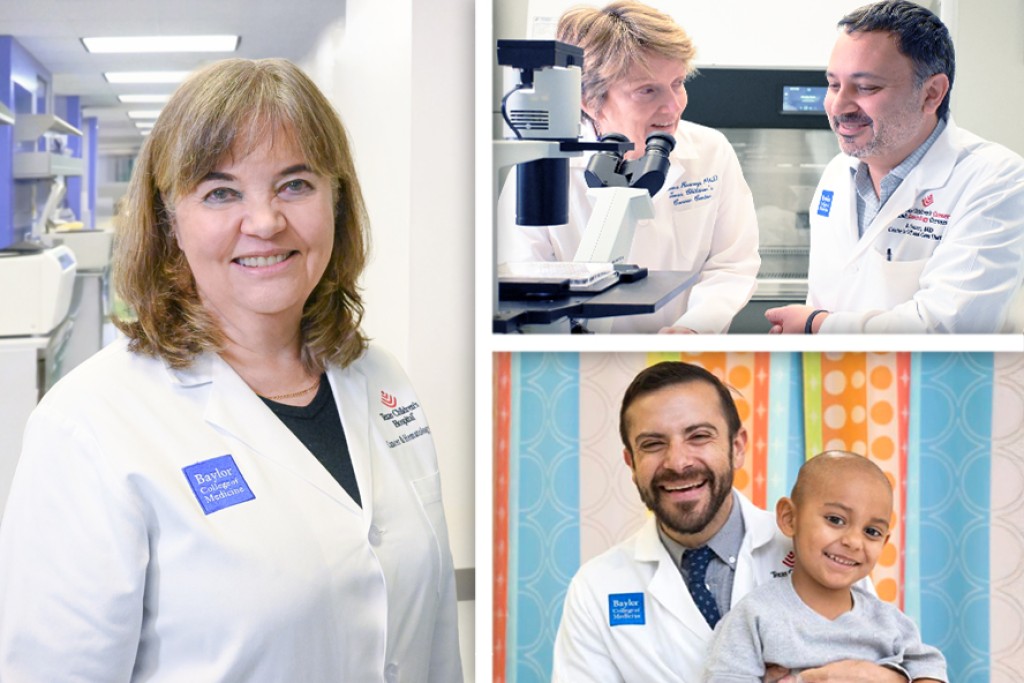
Researchers and clinicians that rely on the GMP facility (clockwise from left panel): Helen E. Heslop, MD, DSc (Hon); Cliona Rooney, PhD; Bilal A. Omer, MD; and David H. Steffin, MD, with patient.
Many of the most advanced cell and gene therapy trials developed by the Center for Cell and Gene Therapy (CAGT) at Texas Children’s Hospital are supported by a critical but often unseen driver: its Good Manufacturing Practice (GMP) facility.
This facility encompasses QA and QC groups, vector manufacturing, and the immune effector cell manufacturing group. Over the past 20 years, the facility has manufactured more than 10,000 cellular therapy products, produced over 70 clinical‑grade viral vectors, and supported more than 100 investigational studies and international clinical protocols. The facility is among the largest academic GMP infrastructures in North America.
Manufacturing products in-house has enabled investigator-initiated therapies, faster protocol refinement and more rapid movement from laboratory discovery into clinical application. The GMP team is also integrated into weekly clinical discussions of patients receiving cell therapies, reinforcing the direct connection between manufacturing and patient care.
“Our GMP facility allows us to take ideas developed in the lab and move them efficiently into clinical studies,” said David Steffin, MD, Associate Chief of Pediatric Bone Marrow Transplant at Texas Children’s Cancer and Hematology Center. “It gives us the flexibility to develop and manufacture innovative products that otherwise might not happen.”
The art and precision of living therapies
Manufacturing living cell products requires both technical precision and clinical judgment. At Texas Children’s, the GMP team monitors cultures closely, interprets real-time data and makes adjustments based on cell behavior.
“It’s highly skilled work and in many ways an art,” Dr. Steffin said. “Decisions are guided by DNA testing, flow cytometry and close clinical collaboration to ensure each product meets strict quality standards.”
That level of precision is supported by the close integration between laboratory, manufacturing, regulatory and clinical teams, strengthened by the facility’s close proximity within Texas Children’s Feigin Tower.
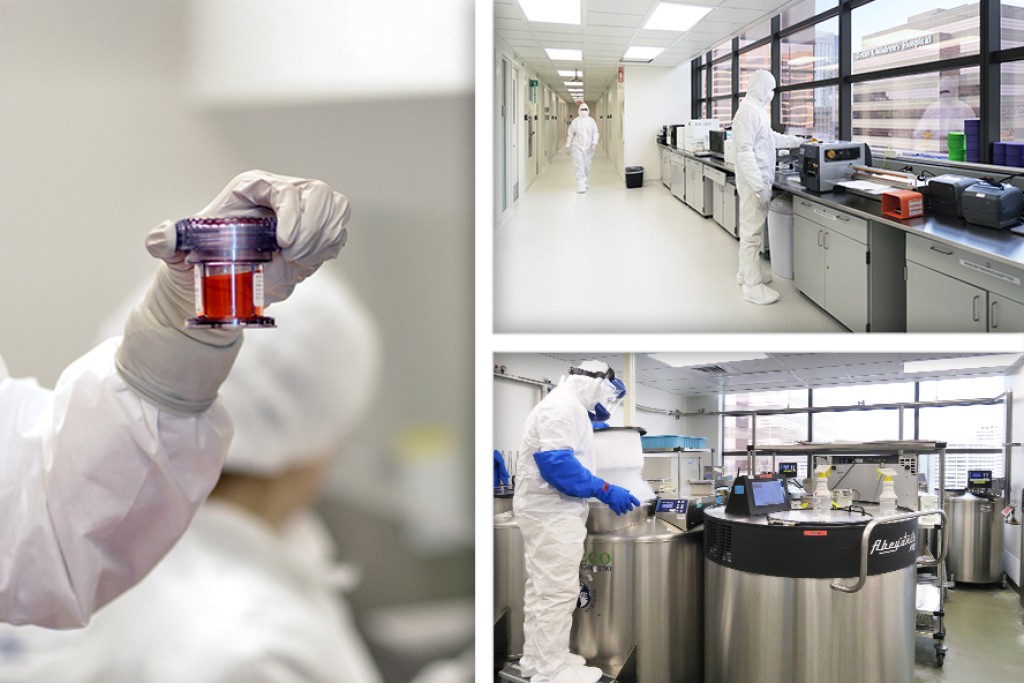
Photos showing the specialized GMP facilities and the cell therapies they help make possible.
GMP technologists: the experts behind every product
While advanced facilities and close collaboration are essential, the success of every cell therapy also depends on the specialists who manufacture it. These highly trained specialists prepare every living cell-based therapy manufactured at Texas Children's, from CAR T-cell therapies to virus-specific T-cell therapies. Their work requires extraordinary attention to detail, constant monitoring of cell cultures and the ability to make informed decisions based on how cells grow and respond in real time.
Our technologists are some of the most experienced cell therapy manufacturing specialists anywhere," Dr. Rooney said. "Their expertise is critical to delivering safe, effective products for our patients."
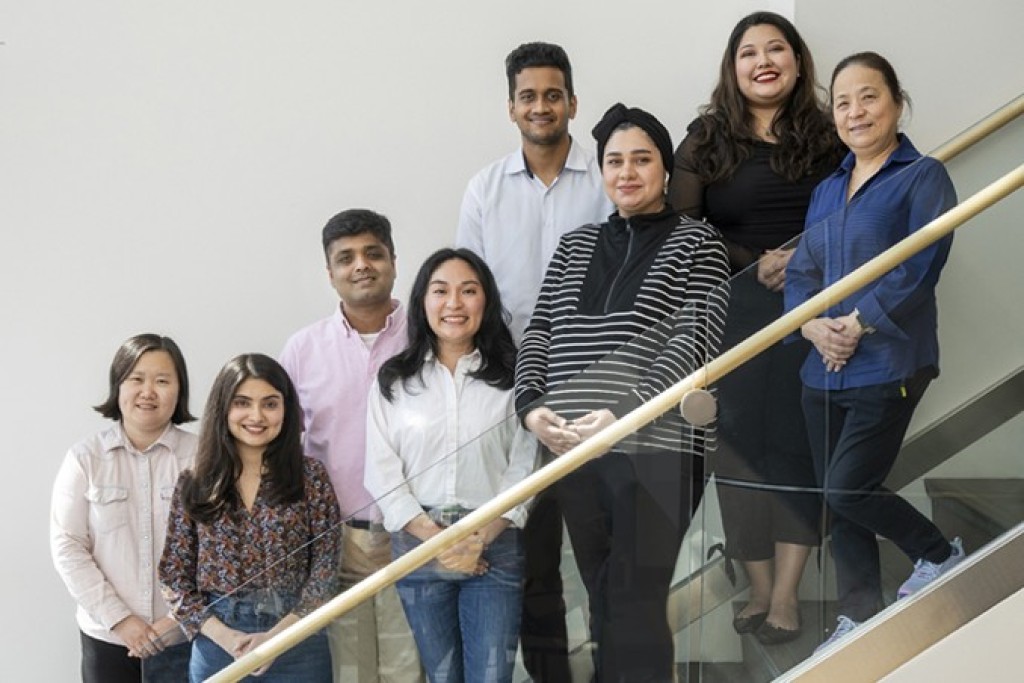
Members of the Center for Cell and Gene Therapy's GMP manufacturing team, whose expertise helps bring innovative cell and gene therapies from the laboratory to patients.
The role demands a unique combination of technical expertise, discipline and dedication. Technologists often spend hours working in highly controlled environments with no room for error, knowing that each product is personalized and may represent a child's best opportunity for a cure. Working side by side with investigators and clinicians, they help refine manufacturing processes, solve complex production challenges and translate scientific discoveries into therapies for patients.
"Every product is unique because every patient is unique," says Birju Mehta, Deputy Director, Immune Cell Effective, GMP Facility. "Our technologists know that every therapy is created for a specific child, and that understanding gives purpose to every step of the process."
Most GMP technologists will never meet the children who receive the therapies they help create, but they understand the significance of every decision they make throughout the manufacturing process. Trained by world-leading pioneers in the field, these individuals contribute to a culture of excellence that has helped shape cell therapy manufacturing worldwide.
Direct collaboration, real-time problem solving
Developing personalized cell therapies often requires iterative refinement. Even small changes in processing can significantly affect how well a therapy works.
“If there’s a manufacturing issue or we need to modify a protocol, we can troubleshoot on the spot,” Dr. Steffin said. “We’re not waiting in a queue or negotiating changes through multiple layers. That shortens timelines and can make a critical difference for patients with urgent needs.”
Physicians and investigators can directly contact the GMP team to track manufacturing progress and anticipate treatment timelines. And the manufacturing process is not limited by external supply and demand constraints that can delay production.
The GMP facility also manufactures clinical-grade viral vectors, plasmids and master cell banks for internal and external use. As one of the few academic centers with this level of comprehensive GMP capacity, the program has been made possible through a highly collaborative partnership supported by Texas Children’s Hospital, Baylor College of Medicine, and Houston Methodist.
Breadth of trials and novel platforms
The GMP operation supports a broad range of cell and gene therapy approaches, including:
• CAR T-cells
• Virus-specific T-cells
• Tumor antigen-specific T-cells
• NK cells
• NKT cells
• Mesenchymal stem cells
• Dendritic cells
• Lymphoblastoid cell lines
The facility supports a diverse portfolio of investigator-initiated trials, primarily single-center studies with some multicenter collaborations. Examples include:
• Multivirus-specific T-cells for transplant recipients with drug-resistant viral infections
• CAR T-cell therapies targeting solid tumors, including pediatric brain tumors
Safety mechanisms are also in place, such as an inducible “off switch,” which allows clinicians to control therapy activity if severe toxicity occurs—enabling the safe evaluation of more potent treatments.
At Texas Children’s, over 40 CAGT-initiated products have been developed for use in clinical trials. In all cases, the GMP team helps investigators think through and validate manufacturability, safety testing and scalability long before first patient infusion. “Some of the therapies we offer are only available because we have the ability to manufacture them ourselves,” Dr. Steffin said. “That integration between discovery science, product development and clinical care allows us to collaborate in ways that would be difficult otherwise.”
Increasing patient access
Compassionate use pathways, which enable patients with life-threatening or serious diseases to access investigational, unapproved drugs, are also made more efficient because of this model, as the team can facilitate submission of required documentation when pursuing expanded access.
“Compassionate use requests can be very challenging when you’re working with third parties,” Dr. Steffin said. “Because we control the manufacturing and quality data, we can submit all the necessary information efficiently.”
Texas Children’s serves a national and international referral base, with a substantial proportion of patients coming from outside the United States. For referring clinicians, the presence of a large, integrated GMP facility translates into practical advantages.
“Ultimately, our capabilities allow us to offer therapies that provide the best possible chance at cure,” Dr. Steffin said. “For referring physicians, it means having options that may not exist anywhere else.”
As cell and gene therapy continues to evolve, GMP infrastructure will remain central to clinical innovation. At Texas Children’s, that infrastructure is embedded within patient care, enabling new trials and expanded access for children who need advanced therapies.
See current trials available at Texas Children’s Cancer and Hematology Center.