New approach helps scientists uncover disease-linked genes that traditional methods can miss
News Release


HOUSTON (July 20, 2026) – Every person's DNA tells a unique story. To unlock the full potential of genetic research, scientists need tools that reflect the complexity of the people they study.
Researchers at Texas Children’s Duncan Neurological Research Institute (Duncan NRI) and Baylor College of Medicine have developed a new computational method that enables scientists to more accurately identify genetic changes linked to disease by accounting for the ancestry and family relationships found in real-world populations.
Published in Nature Genetics, the new approach, called Tractor-Mix, addresses a longstanding challenge in genetic research. Many existing methods struggle to accurately analyze people whose DNA reflects ancestry from more than one ancestral population, as well as relatives participating in the same study. As a result, researchers often must simplify their data or exclude participants altogether.
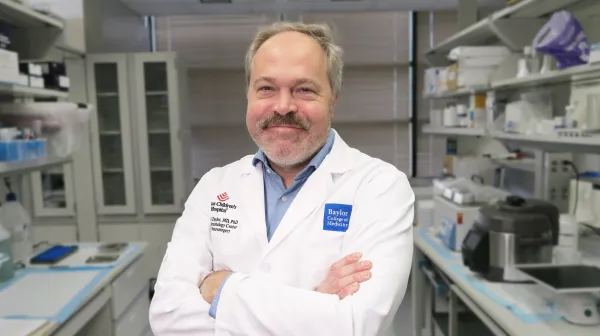
"Many of the statistical methods used in genetic research today were developed using relatively homogeneous populations and/or assume study participants are unrelated," said senior author Dr. Elizabeth Atkinson, investigator at the Texas Children’s Duncan NRI and Assistant Professor in the Department of Molecular and Human Genetics at Baylor College of Medicine. "As genetic studies grow, they are capturing more of the real structure of human populations, including ancestry from multiple populations and family relationships among participants. Tractor-Mix gives researchers a way to model that structure directly, so more participants can be included in analyses while maintaining the statistical rigor needed to identify disease-linked genetic signals."
Genome-wide association studies, commonly called GWAS, compare the DNA of thousands of people to identify genetic differences associated with diseases and traits such as diabetes, cancer, and neurological conditions. These studies have transformed scientists' understanding of human health, but analyzing people with complex ancestry or family relationships has remained a significant challenge.
Tractor-Mix solves that problem by accounting for both ancestry and familial connection at the same time, allowing researchers to analyze more participants without sacrificing accuracy. In other words, Tractor-Mix helps scientists separate genetic signals that previously blurred together in populations with complex ancestry.
"Our goal is to make genetic discovery both more accurate and more complete," Atkinson said. "By developing methods that better reflect real-world populations, we improve our ability to understand disease biology and move closer to precision medicine that benefits patients of all genetic backgrounds."
The researchers tested Tractor-Mix using computer simulations and several large genetic datasets, including the UK Biobank and the Mexico City Prospective Study, one of the world's largest studies of people with mixed ancestry and extensive family relationships. The tool successfully identified known genetic associations while also uncovering new ancestry-specific signals that conventional approaches missed. In one analysis, Tractor-Mix identified a previously undetected genetic region associated with body mass index (BMI), demonstrating its ability to reveal discoveries that otherwise may have gone unnoticed.
Beyond finding new genetic associations, Tractor-Mix helps researchers determine which ancestral background is driving a particular genetic signal. That added level of detail could improve future efforts to identify disease-causing genes, refine genetic risk prediction and better understand why certain diseases affect different populations in different ways.
As genetic databases continue to grow and better reflect the complexity of human populations, the researchers believe methods like Tractor-Mix will become increasingly important for ensuring those data can be analyzed accurately.
"As human populations become increasingly interconnected, our research methods need to evolve alongside them," Atkinson said. "We hope Tractor-Mix helps researchers make discoveries that would have otherwise been missed and ultimately advances our understanding of human health."
First author Taotao Tan and collaborators from Baylor College of Medicine, the University of Oxford, Yale University, Harvard Medical School, Massachusetts General Hospital, the Broad Institute, the National Autonomous University of Mexico and other institutions also contributed to this study.
This work was supported by the National Institutes of Health, the Caroline Wiess Law Fund for Research in Molecular Medicine and the ARCO Foundation Young Teacher-Investigator Fund at Baylor College of Medicine, among other funding sources.
About Texas Children’s
Texas Children's, a nonprofit health care organization, is committed to creating a healthier future for children and women throughout the global community by leading in patient care, education and research. Consistently ranked as the best children's hospital in Texas and among the top in the nation, Texas Children's has garnered widespread recognition for its expertise and breakthroughs in pediatric and women's health. The system includes the Texas Children's Duncan NRI; the Feigin Tower for pediatric research; Texas Children's Pavilion for Women, a comprehensive obstetrics/gynecology facility focusing on high-risk births; Texas Children's Hospital West Campus, a community hospital in suburban West Houston; Texas Children's Hospital The Woodlands, the first hospital devoted to children's care for communities north of Houston and Texas Children's Hospital North Austin, the new state-of-the-art facility providing world-class pediatric and maternal care to Austin families. The organization also created Texas Children's Health Plan, the nation's first HMO focused on children; Texas Children's Pediatrics, the largest pediatric primary care network in the country; Texas Children's Urgent Care clinics that specialize in after-hours care tailored specifically for children; and a global health program that is channeling care to children and women all over the world. Texas Children's Hospital is affiliated with Baylor College of Medicine. For more information, visit www.texaschildrens.org.