Texas Children’s Pioneers Novel In-Utero Approach for Complex Gastroschisis Through Ongoing Clinical Trial
News Release


HOUSTON (September 30, 2026) – A team of fetal and pediatric surgeons at Texas Children’s is pioneering an investigational approach to treating complex gastroschisis before birth through an ongoing clinical trial that is evaluating whether fetal intervention may improve outcomes for babies with one of the most serious abdominal wall defects.
Gastroschisis occurs when a baby’s intestines develop outside the abdomen through an opening in the abdominal wall. While treatment traditionally occurs after birth, complex cases can require multiple surgeries, months in the neonatal intensive care unit and prolonged intravenous nutrition. Even with the highest level of medical care, approximately one in 10 babies with the most severe cases may not survive.
Texas Children’s clinical trial is investigating whether intervening intervention before birth may help limit disease progression, facilitate the return of the intestines to the abdomen and support bowel recovery while the baby remains in the womb. As part of the investigational approach, a highly specialized Botox injection is used before surgery to relax the abdominal wall.
Theo’s story highlights one outcome observed during the ongoing clinical trial and underscores the potential benefits researchers are evaluating. His London-based parents, Maisie and Josh, learned during their 20-week ultrasound that their son had complex gastroschisis. They traveled to Houston during pregnancy and underwent the procedure at 26 weeks gestation.
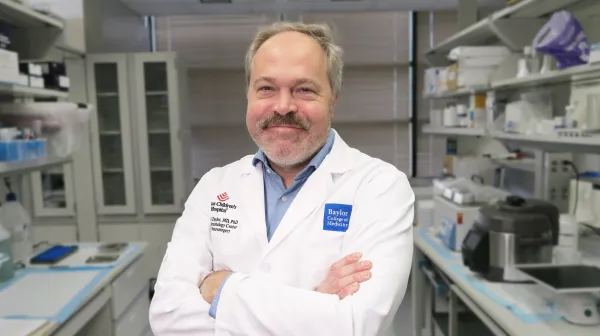
“For years, babies with complex gastroschisis have faced a difficult start to life. Seeing Theo born healthy and discharged just days later like any other healthy baby is extraordinary,” said Dr. Sundeep Keswani, Associate Surgeon-in-Chief at Texas Children’s Hospital and principal investigator of the clinical trial. “Outcomes like his give us hope that we're changing what's possible for babies before they're even born and reinforce the importance of continuing this trial to be able to offer treatment that is based on the strongest available clinical evidence.”
Theo’s Journey
Months later, Theo was born vaginally and full term at 39 weeks on February 18. He weighed a healthy birth weight, began breastfeeding and was discharged from the hospital three days later. He is now back home in London and meeting all developmental milestones.
"When we received Theo's diagnosis, we feared what his first months of life would look like — surgeries, the NICU, so much uncertainty. Instead, we brought home a perfectly healthy baby just days after he was born. Every care team member who cared for us turned one of the scariest chapters of our lives into one of the most hopeful. Because of this surgery, Theo is happy, healthy, and full of life — we couldn't ask for anything more."
The procedure builds on a decade of research by the clinical team and the evolution of Texas Children’s leadership in fetal surgery. In 2014, under the direction of Dr. Michael Belfort and Pediatric Neurosurgeon Dr. William Whitehead, Texas Children’s became the first center in the U.S. to perform fetoscopic repair of neural tube defects, also known as spina bifida, and remains among a select group of centers in the country offering this procedure.
“What we are learning through this trial could extend far beyond gastroschisis,” said Dr. Belfort, Obstetrician and Gynecologist-in-Chief and Director of the Texas Children’s Fetal Center. “By demonstrating what is possible when we intervene before birth, we are opening the door to exploring fetal treatments for other serious conditions affecting the heart, lungs and brain. We have an opportunity to fundamentally expand what fetal surgery can accomplish and change the course of disease before a child is even born.”
The procedure remains investigational and has not been established as safe or effective for routine clinical care. The ongoing clinical trial is regulated by the U.S. Food and Drug Administration (FDA) and is designed to evaluate the safety, feasibility and potential effectiveness of this approach. Individual participant outcomes may vary, and additional participants are needed to complete the current phase of the trial. Enrollment remains open to eligible families from around the world.
The team expects to publish its initial clinical trial data in medical journals in the coming months.
About Texas Children’s
Texas Children’s, a nonprofit health care organization, is committed to creating a healthier future for children and women throughout the global community by leading in patient care, education and research. Consistently ranked as the best children’s hospital in Texas and among the top in the nation, Texas Children’s has garnered widespread recognition for its expertise and breakthroughs in pediatric and women’s health. The system includes the Texas Children’s Duncan NRI; the Feigin Tower for pediatric research; Texas Children’s Pavilion for Women, a comprehensive obstetrics/gynecology facility focusing on high-risk births; Texas Children’s Hospital West Campus, a community hospital in suburban West Houston; and Texas Children’s Hospital The Woodlands, the first hospital devoted to children’s care for communities north of Houston. The organization also created Texas Children’s Health Plan, the nation’s first HMO for children; Texas Children’s Pediatrics, the largest pediatric primary care network in the country; Texas Children’s Urgent Care clinics that specialize in after-hours care tailored specifically for children; and a global health program that is channeling care to children and women all over the world. Texas Children’s Hospital is affiliated with Baylor College of Medicine. For more information, visit www.texaschildrens.org.