Texas Children's Global Health Global Neonatology

What if we could end
preventable newborn
deaths?
WE CAN
preventable newborn
deaths?
Give to Global Neonatology
Thank you for supporting the Global Neonatology program at Texas Children's Hospital. Your gift helps us provide life-saving care and develop training programs to treat children during their first month of life.
Our Mission

Texas Children’s Global Neonatology Program focuses on addressing the leading causes of neonatal mortality and morbidity by building the capacity of local teams to provide structured and evidence-based care, keeping mothers and newborns together to promote optimal outcomes.
The Challenge

In many low- and middle-income countries, hospitals lack specialized staff, equipment, and infrastructure needed for newborn survival. Without access to timely, skilled neonatal care, even treatable complications can become life-threatening.


Unique Approach

The Global Neonatology Program offers a collaborative, capacity building approach to improving newborn outcomes globally.
We work alongside local teams to strengthen and develop the care provided to newborns and their families. Recognizing the limited infrastructure found in low-resource settings, we aim to help create systems for neonatal care that are responsive to local needs and priorities.


Where We Work

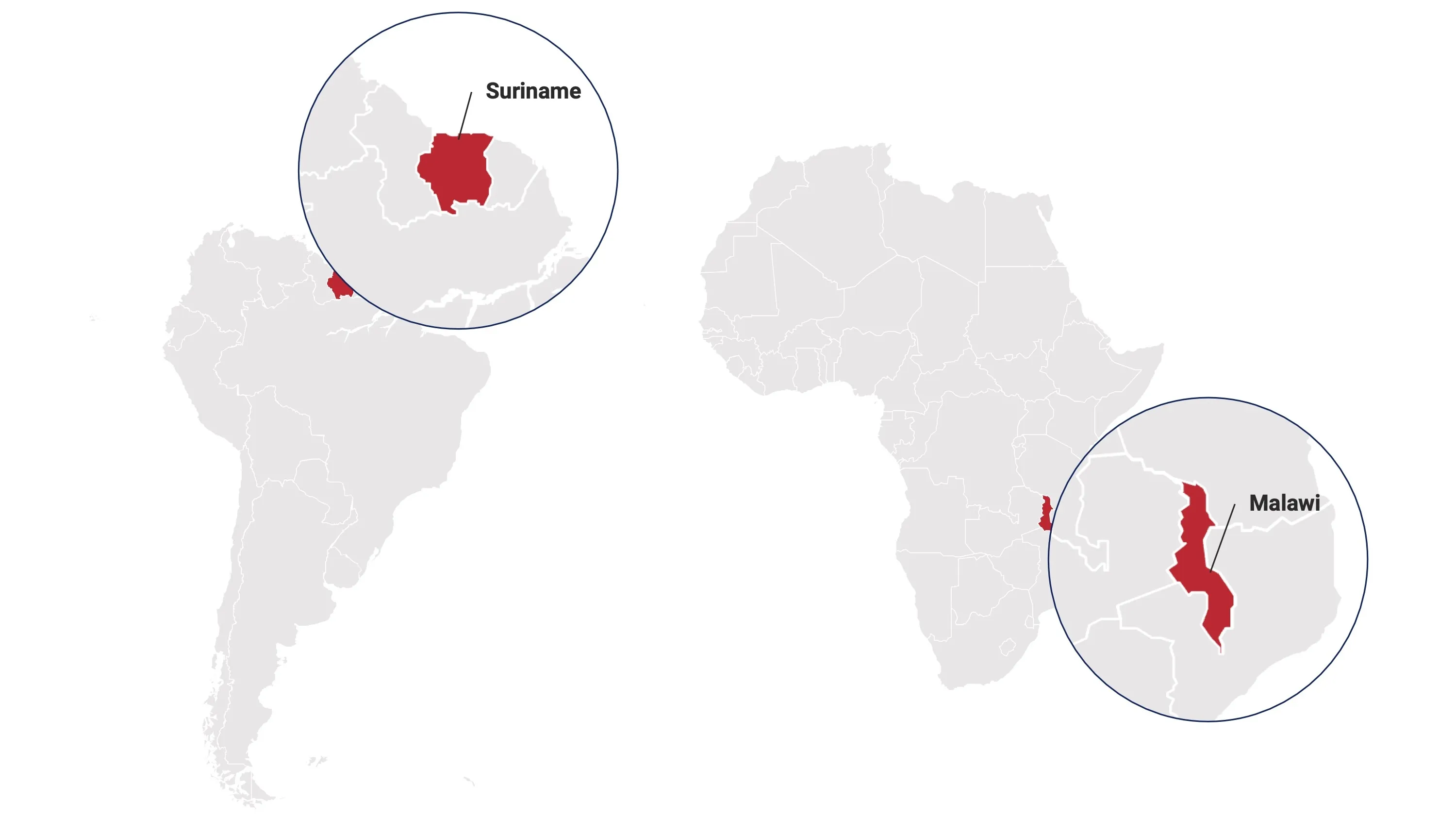
Malawi
Area 25 Community Hospital in Lilongwe serves one of Malawi’s fastest-growing regions, with over 9,000 deliveries projected in 2025. Originally a health center, Area 25 has transformed into a community hospital and hub for maternal and neonatal care through a public-private partnership with the Malawi Ministry of Health.
Suriname
In 2025, the Network partnered with Suriname to advance neonatal care through a quality improvement course focused on reducing late-onset neonatal sepsis at Academisch Ziekenhuis Paramaribo — the teaching hospital in Suriname — and a NICU observership at Texas Children’s Hospital, enabling hands-on learning, exchange of best practices, and strengthened infection prevention systems.
Leadership

Kristina M. Reber, MD
Chief, Neonatology, Texas Children’s Hospital
Professor, Pediatrics-Neonatology, Baylor College of Medicine

Monika Patil, MD
Co-Director, Global Neonatology Program, Texas Children’s Hospital
Associate Professor, Pediatrics-Neonatology, Baylor College of Medicine

Maya Brasher, MD
Co-Director, Global Neonatology Program, Texas Children’s Hospital
Assistant Professor, Pediatrics-Neonatology, Baylor College of Medicine
Connect with Texas Children’s Global Health Network and stay informed about
our efforts to empower communities to build healthier, happier and more prosperous futures.