Drs. Linda Kim and Junyoung Sonn win 2026 Zoghbi Scholar Awards
Awards


Congratulations to Dr. Linda Kim (first place) and Dr. Junyoung Sonn (second place), winners of the 2026 Zoghbi Scholar Award.
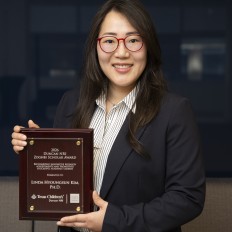
Dr. Kim will receive a $50,000 research award as well as an individual monetary award. These funds will help her generate preliminary data as she plans for an independent research career.
Her project will investigate how abnormal activity in the cerebellar nuclei (CN) contributes to gait, posture, and other motor symptoms in Parkinson’s disease (PD), an area that remains poorly understood compared with the traditional focus on basal ganglia dysfunction. Using progressive genetic and neurotoxin-based mouse models of PD, the study will track CN neural activity across disease stages and use multidimensional electrophysiological measures and machine-learning classifiers to identify PD-specific cerebellar firing signatures that distinguish PD from normal aging and other movement disorders. Preliminary findings already suggest that abnormal CN activity and tremor emerge during the prodromal stage and that cerebellar deep brain stimulation (DBS) can reduce tremor. Ultimately, the work aims to establish mechanistic biomarkers that could guide the development of personalized, closed-loop cerebellar DBS to treat difficult-to-manage gait and postural deficits in PD.
Dr. Sonn will receive a $25,000 research award and a separate individual award.
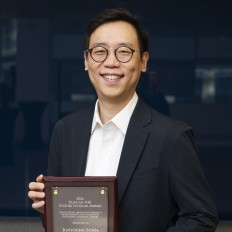
His project seeks to uncover how mutations in AFF4, a key component of the Super Elongation Complex that regulates transcription, disrupt human brain development and cause CHOPS syndrome, a rare neurodevelopmental disorder. Using patient-derived iPSCs carrying the CHOPS-associated AFF4 T254A mutation, the study will examine how the mutation alters neural progenitor differentiation, neuronal and synaptic maturation, and neuronal network activity. It will then use CUT&Tag and PRO-seq to determine how the mutation affects activity-dependent transcription and establish whether the disease results from gain-of-function, dominant-negative, or another molecular mechanism. Ultimately, the work aims to define the molecular basis of CHOPS syndrome and provide a mechanistic foundation for choosing appropriate future therapeutic strategies.