
The Pati Lab
Ewing Sarcoma | Breast Cancer | Genomic Instability | Cellular Stress Response | Cancer Therapeutics
Transforming Fundamental Cancer Biology into Next-Generation Therapies
Cancer cells survive by exploiting vulnerabilities created by their own genetic defects. The Pati Laboratory is dedicated to discovering those vulnerabilities and converting them into therapeutic opportunities.
Our research sits at the intersection of chromosome biology, cellular stress responses, chemical biology, and translational oncology. By uncovering how cancer cells adapt to genomic instability and proteotoxic stress, we identify novel molecular dependencies that can be selectively targeted for therapy. We combine mechanistic biology, medicinal chemistry, and advanced preclinical models to develop innovative treatment strategies for aggressive cancers, with a particular focus on Ewing sarcoma and breast cancer.
Our vision is simple: Turning Cancer's Evolutionary Advantages into its Greatest Weaknesses

Our Research

Exploiting Stress Dependencies in Ewing Sarcoma
Ewing sarcoma is an aggressive pediatric cancer with few effective treatment options once it spreads or recurs. Our research has identified a key vulnerability: these tumors rely on chronic cellular stress signaling to survive. By targeting the endoplasmic reticulum stress response (ERS) and unfolded protein response (UPR), we aim to develop novel therapies that disrupt these adaptive mechanisms and selectively eliminate cancer cells.

Targeting Chromosomal Instability in Breast Cancer
Chromosomal instability drives the progression, metastasis, and treatment resistance of many aggressive breast cancers. Our research identified the chromosome-segregation enzyme Separase as a key driver of this process. We are developing novel Separase-targeted therapies to suppress chromosomal instability at its source and improve treatment options for patients with resistant breast cancer and other genomically unstable cancers.
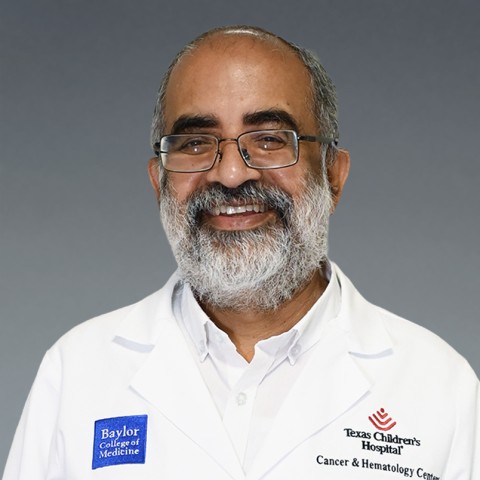
Meet Dr. Debananda Pati
Dr. Debananda Pati is a tenured Professor at Baylor College of Medicine, Principal Investigator at Texas Children’s Cancer Center, and member of the Dan L Duncan Comprehensive Cancer Center. His research has advanced fundamental understanding of cohesin biology, chromosome segregation, and cancer-associated genomic instability. Over the past two decades, his laboratory has pioneered studies of Separase and cohesin pathways and translated these discoveries into innovative therapeutic strategies for Ewing sarcoma and breast cancer. Dr. Pati has authored more than 70 peer-reviewed publications, secured continuous federal and foundation funding. A passionate and award-winning mentor, Dr. Pati has mentored more than 50 students, postdoctoral fellows, and early-career scientists, helping launch successful careers at leading academic, research, and industry organizations around the world. He is deeply committed to fostering the next generation of scientists while advancing transformative discoveries that improve the lives of cancer patients.

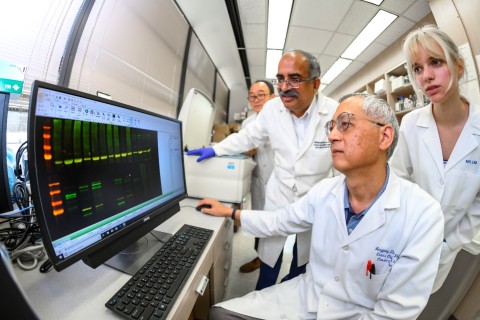
Meet The Team
The Pati Laboratory brings together molecular biologists, cancer cell biologists, medicinal chemists, pharmacologists, bioinformaticians, and translational researchers united by a common goal: developing better therapies for patients with aggressive cancers. Our team integrates genome engineering, chemical biology, proteomics, functional genomics, and sophisticated preclinical cancer models to uncover the molecular mechanisms that drive tumor growth and therapeutic resistance. We value creativity, rigor, collaboration, and mentorship, creating an environment where innovative ideas can move rapidly from discovery to therapeutic development. Together, we are building the scientific foundation for the next generation of precision cancer medicines.
Related News


Contact

Texas Children’s Hospital - Feigin Center
1102 Bates Ave
Houston, TX 77030
Research inquiries:
Dr. Debananda Pati
Texas Children’s Hospital
Professor
1102 Bates Avenue FC1230.07
Email: pati@bcm.edu
General lab inquiries:
Dr. Nenggang Zhang
Senior Scientist