
Michael Taylor, MD, PhD, FRCS(C)
- Cancer and Blood Disorders

The Cyvia and Melvyn Wolff Chair of Pediatric Neuro-Oncology, Texas Children's Cancer and Hematology Center
Director, Pediatric Brain Tumor Research Program
Professor, Department of Pediatrics, Division of Hematology-Oncology, Baylor College of Medicine
Scholar, Cancer Prevention and Research Institute of Texas
Professor, Department of Pediatrics, Division of Neurosurgery, Baylor College of Medicine
Staff Neurosurgeon, Neurosurgery, Texas Children's Hospital
Office location:
1102 Bates Avenue
Houston, TX 77030
Get to know Michael Taylor, MD, PhD, FRCS(C)
Dr. Taylor is a pediatric neurosurgeon at Texas Children’s Hospital and a Professor in the Departments of Pediatrics – Hematology-Oncology, and Neurosurgery at Baylor College of Medicine, Houston. He is also the Director of the Pediatric Brain Tumor Research Program at Texas Children's Cancer and Hematology Center and a CPRIT Scholar in Cancer Research. His research centers on the molecular genetics of medulloblastoma and ependymoma, two of the most common malignant pediatric brain tumors. He has published over 400 peer-reviewed publications, many in high-impact journals such as Nature, Science, Cell, Cancer Cell and Lancet Oncology. His publications have been cited over 70,000 times and his findings adopted to improve clinical practice. His group demonstrated that medulloblastoma is composed of at least four distinct diseases (Journal of Clinical Oncology, 2012; Cancer Cell, 2017; Nature, 2017) and that there is clinically significant heterogeneity in metastatic medulloblastomas (Nature, 2012, 2016; Nature Genetics, 2017). His team recently showed that cerebellar tumors are a disorder of early brain development (Nature, 2019; Nature, 2022; Cell, 2024), that CAR-T-cells are an effective preclinical treatment for Group 3 medulloblastoma and PFA ependymomas (Nature Medicine, 2020) and that PFA ependymomas have a unique metabolic program, which leads to a phenotype that appears to be unique among mammalian cells (Cell, 2020).
Education
| School | Education | Degree | Year |
|---|---|---|---|
| University of Toronto | Post-doctoral Fellowship | Functional Genomics | 2005 |
| St. Jude Children's Research Hospital | Post-doctoral Fellowship | Cancer Genomics | 2004 |
| University of Toronto | FRCS | FRCS Neurosurgery | 2003 |
| University of Toronto | PhD | Doctor of Philosophy, Molecular Genetics of Paediatric Brain Tumours | 2002 |
| University of Western Ontario | Medical School | Doctor of Medicine | 1994 |
Organizations
| Organization Name | Role |
|---|---|
| Brazilian Academy of Science | Corresponding Member |
| Royal Society of Canada | Fellow and Member |
Honors and awards
- 2026
-
Texans Conquer Cancer Award, CPRIT
- 2019
-
Fellow and Member of the Royal Society of Canada
- 2019
-
The Distinguished Oliver Smithies Lecture, McLaughlin Centre of the University of Toronto
- 2019
-
H. Richard Winn, MD, Prize, The Society of Neurological Surgeons
- 2016
-
Zulch Prize in Basic Neuroscience, Max Planck Society
- 2016
-
Guha Award in Neuro-Oncology, Society for Neuro-Oncology
- 2016
-
Voynick Award in Neuro-Oncology, Yale University
- 2016
-
Lister Prize in Surgery, University of Toronto
- 2015
-
Canadian Cancer Society William E. Rawls Prize
- 2013
-
Garron Family Endowed Chair in Childhood Cancer Research, Hospital for Sick Children
- 2011
-
George-Armstrong Peters Prize in Surgery, University of Toronto
- 2010
-
Canadian Institute of Health Research, Clinician-Scientist Award, Phase II - Renewal
- 2010
-
Royal College of Physicians and Surgeons of Canada Gold Medal Award in Surgery
- 2009
-
Canadian Cancer Society Award, Young Investigator Award in Biomedical Science
- 2008
-
Canada’s Top 40 under 40 award
* Texas Children’s Hospital physicians’ licenses and credentials are reviewed prior to practicing at any of our facilities. Sections titled From the Doctor, Professional Organizations and Publications were provided by the physician’s office and were not verified by Texas Children’s Hospital.
Highlights
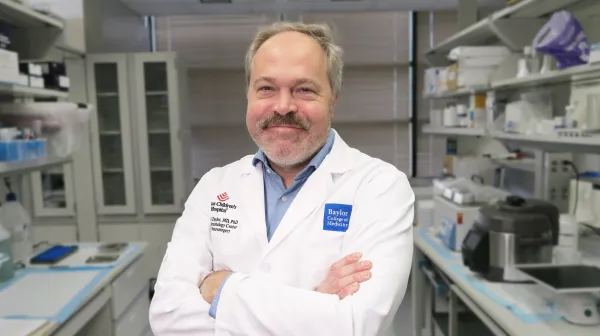
Texas Children’s Dr. Michael Taylor Honored by CPRIT for Advancing Childhood Brain Tumor Research
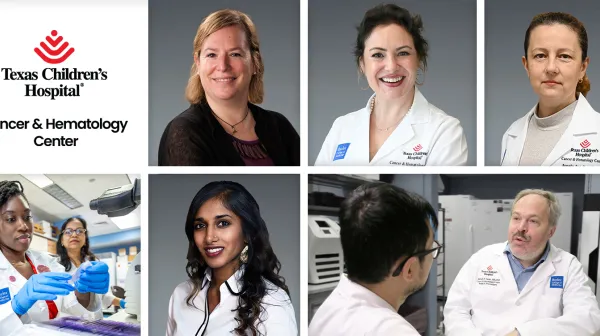


New research points out a promising strategy for treating metastatic medulloblastoma
BCM.edu

Research Laboratory:
Taylor Lab
Research Area:
Brain Tumors
The Taylor Lab’s research centers on the molecular genetics of medulloblastoma and ependymoma, two of the most common malignant pediatric brain tumors.