
Child Life Department
Animal-Assisted Therapy

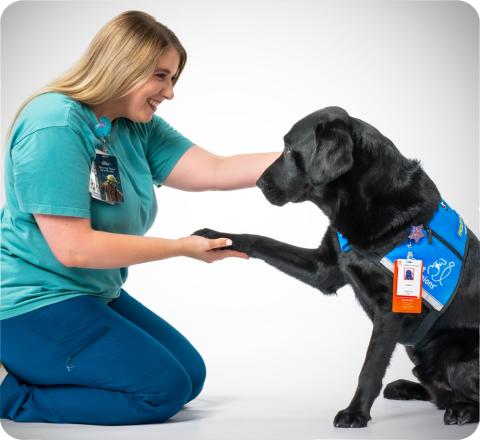
Texas Children’s Pawsitive Play Program is designed to enhance the emotional well-being of patients and families in the hospital. The animal-assisted therapy dogs provide support to those who may be having trouble coping with a hospital stay, new diagnosis or certain medical procedure.
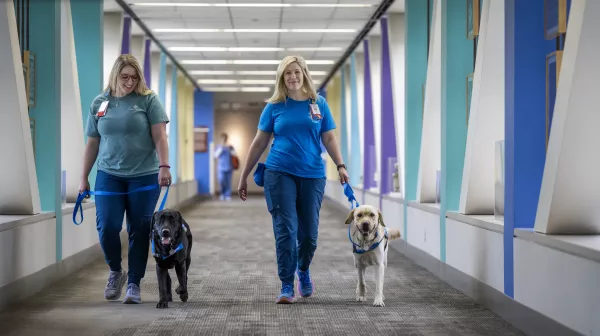
Our dogs are specially bred and trained to work as a service dog in a pediatric hospital setting, receiving over a year and a half of training before beginning their roles at Texas Children’s Hospital. Our dogs work full time alongside our child life specialists and coordinate with the multi-disciplinary team to provide goal-oriented, therapeutic interventions and emotional support for hospitalized children as well as families and staff.
Just like any other employee, the dogs have a badge and enjoy a lunch break. They spend time outside of their vests playing with toys and each other. To ensure they always looks their best, they are groomed weekly and their paws are wiped down daily.
Animal-Assisted Services
- Facilitating therapeutic play
- Encouragement and support during physical, occupational and speech therapy
- Providing comfort and distraction during a medical procedure
- Patient and family psychosocial support
Evidence-Based Benefits of Animal-Assisted Therapy
- Increased: Emotional well-being, happiness, calm, relaxation, healing, adjustment to hospital environment, and self-confidence
- Decreased: Anxiety, perception of pain, fear and isolation
Frequently Asked Questions
When you see a handler and facility dog on campus, feel free to say hello but please refrain from physical engagement with the facility dog. Our dogs and handlers have full schedules visiting patients and this will allow them to remain focused on their daily work routine.
Please speak with your unit child life specialist for an assessment of coping needs and medical status to determine if animal assisted therapy is appropriate at this time.
No. Our dogs are groomed at least once a week for infection control purposes. The handlers will sanitize the patient’s hands before and after the intervention as well as use a sheet as a barrier on a patient’s bed to control shedding.
Child life specialists will not consult the dogs to see a patient or family who is fearful or allergic. If you encounter the dogs in the hallway, please let their handler know if you or your child are allergic or scared of dogs. We understand that not everyone likes dogs and we will make every effort to respect your wishes.
Our dogs go home each night and live with their handler. Their handler cares for them 24/7. When the dogs are in the hospital they know they are at work and have a very important job to do; however, at home they are just like any other dog. They love to run and play outside when they are off the clock!
Meet Lawton
Celebrate National Dog Month by getting to know Lawton, a facility dog helping patients and families through our Pawsitive Play Program.
Explore more
Health Briefs
Mar 26, 2026
Four‑Year‑Old Patient Wins “Best in Show” at Houston Rodeo Children’s Hospitals Art Con...


Health Briefs
Aug 28, 2025

Fundraising
Jan 10, 2025
Texas Children’s Heart Center Celebrates $25,000 grant from the Toy Foundation

Health Briefs
Dec 26, 2024
Texas Children's holiday magic for cancer patients
Texas Children's holiday magic for cancer patients
News Release
Dec 23, 2024
New Facility Dog Brings Heartfelt Holiday Cheer to Patients in Texas Children’s Heart Center

News Release
Jul 01, 2024
Texas Children’s Welcomes Two New Facility Dogs to Bring Comfort and Support to Patients

News Release
Mar 06, 2024