Texas Children’s Cancer and Hematology Center Saves Young Patient in Clinical Trial
Patient Stories


Tatiana was running out of options to treat her son Ismael’s aggressive liver cancer. After learning about Texas Children’s, she chose the hospital as a last resort.
Today, Ismael, who is five years old, is in remission because of her choice.
“When we arrived at Texas Children’s Hospital in Houston, everything happened like a miracle,” said Tatiana with a wide grin.
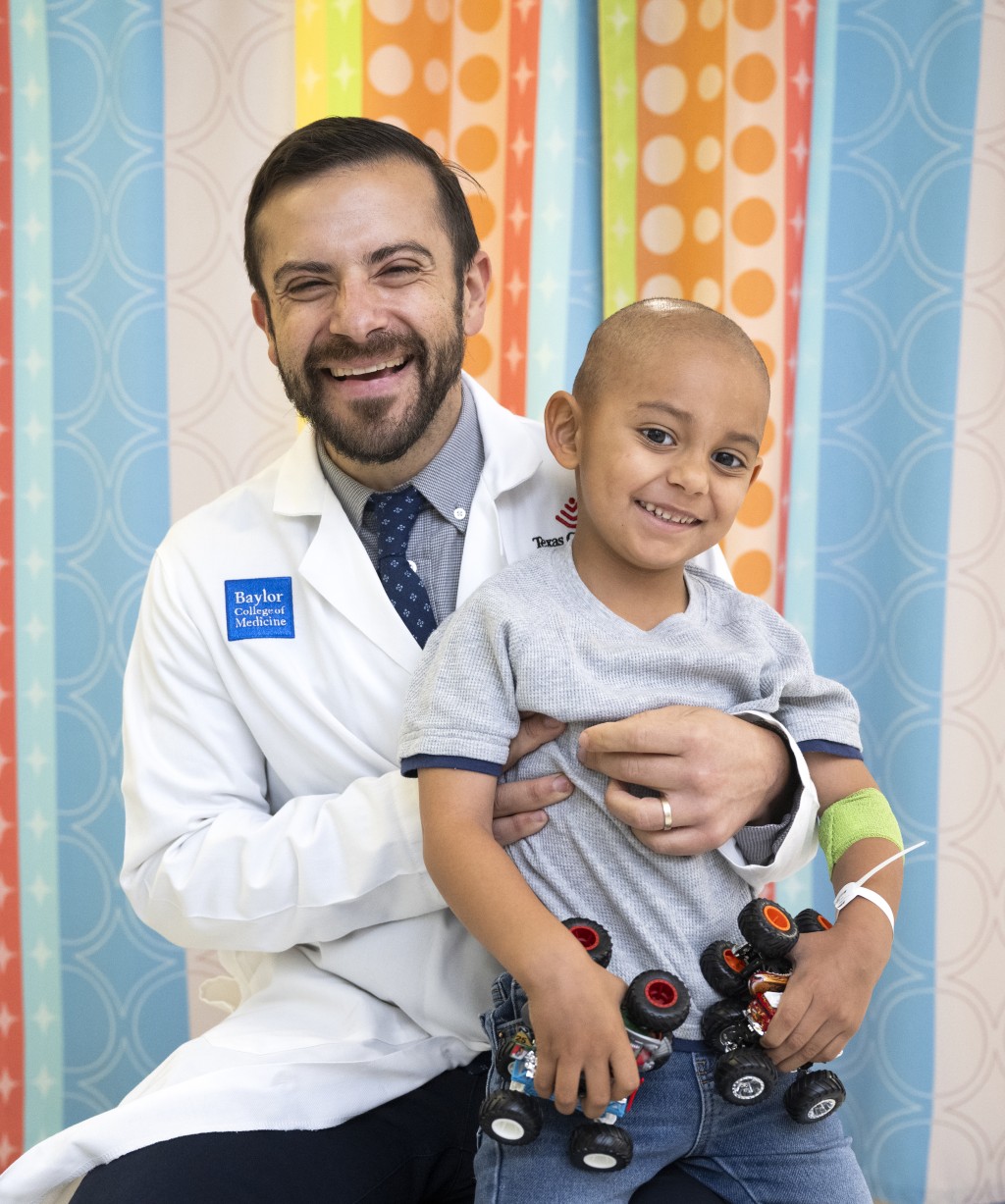
Born in Colombia, Ismael was diagnosed with hepatoblastoma at two years old. This very rare liver cancer is often found in babies and young children.
Since this type of cancer grows slowly, children usually do not have symptoms until the solid tumor is big enough to affect their body. Symptoms often include stomach pain, a lump in the middle or upper right of the child’s belly, reduced appetite, weight loss, nausea and vomiting.
At the time of his diagnosis, Tatiana learned that the cancer had spread to Ismael’s lungs and hipbone. Unfortunately, doctors in Colombia could not stop the cancer from progressing.
He even had post-surgery complications at one of the hospitals where he was being treated when he was four years old. “It was horrible,” remembered Tatiana. “He was vomiting and couldn’t eat solid food for a month, but he still had a smile on his face. Then, I was told he would have to receive even more chemotherapy after he recovered from surgery, which would be hard on his body.”
With hope dimming by the hour, Tatiana didn’t know what the next steps would be. Then, she received life-changing news.
“The same day I was told Ismael would have to undergo more chemotherapy, my mother-in-law told me that she went out with a friend whose son’s wife works at Texas Children’s Hospital,” said Tatiana. “I sent an email to the wife detailing Ismael’s medical background.”
Tatiana was put in contact with the team from Texas Children’s Cancer and Hematology Center’s (TXCH) Liver Tumor Program, and the team recommended Ismael enroll in a phase one clinical trial developed by researchers at TXCH and the Center for Cell and Gene Therapy (CAGT).
With over 350 published research papers, TXCH and CAGT have successfully translated innovative cell and gene therapy practices from the laboratory to the clinic. Doctors at TXCH use cell therapy to repair malfunctioning cells, while gene therapy is used to correct mutated genes.
Recognizing TXCH’s impact in this rapidly growing field, Tatiana decided to take a chance on the program.
In late May, Ismael joined the four-to-six-week clinical trial. Tatiana didn’t know what the outcome would be, but one thing was certain: her son’s participation would help advance clinical research and expand treatment options for children with liver cancer.
“I looked at the situation from the angle that if it’s going to heal my son, that’s great, but if not, his involvement in the clinical trial can help other children with cancer,” said Tatiana.
For the clinical trial, TXCH doctors used an immunotherapy known as chimeric antigen receptor (CAR) T-cell therapy to treat Ismael’s liver cancer. T-cells are white blood cells part of the immune system.
During CAR T-cell therapy, malfunctioning cells are removed from the patient’s body and genetically engineered in a lab. Within minutes, the modified cells are injected into the body where they multiply and attack the malfunctioning cells such as those that are cancerous. Immunotherapy is less toxic to the body than chemotherapy.
“It's really exciting because a lot of families will look at this tiny little vial of cells that you're pushing into the patient’s IV, and they almost don't think that it's enough to do anything, but they grow and then, they hopefully kill cancerous cells,” said Dr. David Steffin, the Associate Chief of the Cell Therapy and Bone Marrow Transplant Program at Texas Children’s and Ismael’s clinical trial doctor.
Dr. Steffin said that he and his team used a protein called glypican-3 (GPC3) as a marker to help the CAR T-cell therapy identify and target Ismael’s cancerous cells. GPC3 is often used as a marker for the immunotherapy because it’s found in high amounts in liver cancer.
Ismael responded well to the CAR T-cell therapy, and he even underwent another round to ensure all the cancerous cells were gone.
Dr. Steffin said that the immunotherapy is safe, but some patients can experience side effects including fever, fatigue, headaches and low blood pressure, which is called cytokine release syndrome (CRS). “Because of these symptoms, we have patients stay in the Houston area for around a month. Thankfully, we know how to treat CRS well, so most patients tolerate this very well during their treatment course,” said Dr. Steffin.
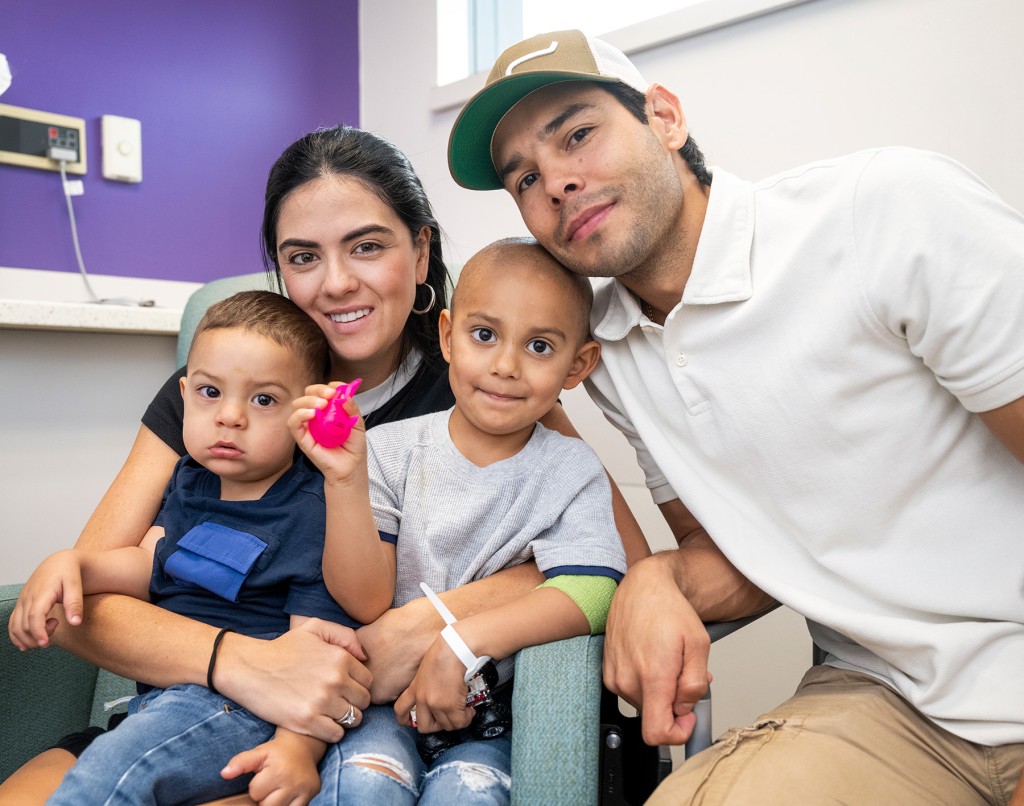
Tatiana said, overall, Ismael had a good experience with CAR T-cell therapy and is now back in school in Colombia.
“We are very happy,” said Tatiana in a cheerful voice. “I have hope that someday CAR T-cell therapy will be the first treatment option for pediatric liver cancer.”
Even though Ismael is in remission, his TXCH doctors often perform tests to monitor his health.
“We have an amazing team of research coordinators, nurse coordinators, cell therapists and ancillary staff who are working with his doctors in to get blood draws at their medical institution and send them to us using the blood kits we provide them,” said Dr. Steffin in an upbeat voice.
Dr. Steffin said one of his favorite parts about working for Texas Children’s is seeing how dedicated the patients’ families are to their child’s clinical trial. “Families devote their lives to their children, and to see how willing they are to donate their own time, blood and testing in addition to moving to a faraway place for a chance to better their child’s life makes a huge difference,” he said.
He also said he is proud to be part of a team that is passionate about advancing clinical trials and has a welcoming nature, which makes working at Texas Children’s as meaningful as serving the patients.
“Our physicians and researchers work hard for their patients,” said Dr. Steffin. “The entire team is talented, hard-working and passionate; yet we still have a Texas-style collegiality when performing rigorous research. The combination of those aspects makes Texas Children's an exciting and inviting place to work. And when it's a great place to work, patients and their families have a good experience as well.”
Tatiana said she appreciates the kindness and support TXCH doctors provided during Ismael’s clinical trial. Their compassionate care reignited her hope that her son’s cancer would go into remission.
“Texas Children’s literally saved my son’s life,” she said. “We are very grateful.”