Image


Texas Children’s Hospital has long been affiliated with Baylor College of Medicine, joining forces with this leading medical school in the areas of pediatrics, pediatric surgery, and obstetrics and gynecology to achieve healthier mothers and children. With our shared commitment to improving maternal and pediatric outcomes through research, education and health care, we are creating a healthier, brighter future for children and women around the world.
Ranked by U.S. News & World Report among the nation’s leading medical schools for research, Baylor College of Medicine advances the health of women, children and families through scientific discovery.
Funding awarded to Baylor by the National Institutes of Health (NIH), as reported by the Blue Ridge Institute for Medical Research, reflects the depth and breadth of the college’s research enterprise and its sustained national competitiveness. Baylor consistently ranks among the top medical schools in the United States for NIH funding and is a recognized leader in pediatric research.
Through our academic partnership with Baylor College of Medicine, physician-scientists at Texas Children’s conduct federally funded research across a wide range of disciplines, from rare and genetic diseases to infectious disease, immunology, neonatal and fetal medicine, and other complex pediatric conditions. Together, we are advancing discoveries that translate into improved treatments and outcomes for children and families.
For more than 60 years, Texas Children’s Hospital has served as Baylor College of Medicine’s primary pediatric training site, creating the next generation of leaders in pediatric care.
As the largest pediatric hospital in the nation, providing medical care across more than 40 pediatric subspecialties, Texas Children’s offers a rich learning environment for Baylor’s medical students, residents and fellows. Texas Children's also serves as a primary referral site for some of the world’s most challenging pediatric patients, providing these Baylor learners an opportunity to routinely care for patients with conditions rarely seen in most training programs.
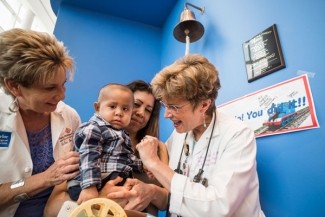
Texas Children’s Hospital is staffed primarily by Baylor College of Medicine physicians. In addition to providing expert care across the full range of pediatric subspecialties, Baylor faculty direct centers and services that include Texas Children’s Pavilion for Women, Texas Children’s Emergency Center, pediatric surgery suites, a Pediatric Intensive Care Unit, a Cardiac Intensive Care Unit, a Neonatal Intensive Care Unit, and the Texas Children's Cancer Center.

Highlights from the long and productive history of collaboration between Baylor and Texas Children's include: