Image
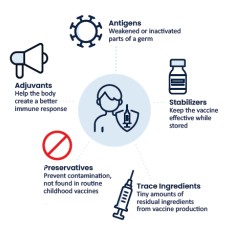
As we talk about vaccine ingredients, it is important to remember that most chemical names may sound alarming. While everything in the world is a chemical or comprised of chemicals – from water to air to our own bodies – the formal chemical names are unfamiliar to most people. Many of the foods we eat contain chemicals whose formal names may sound scary, but in truth, are naturally occurring and harmless.
The primary component of vaccines are antigens. Antigens are harmless parts of a virus or bacteria that train your child’s immune system to recognize and fight disease. Think of an antigen like a “wanted poster” – it shows your child’s immune system what the germ looks like so it knows to stop the real germ if it ever shows up.
In addition, very small amounts of other ingredients are added to vaccines to help improve immune response, prevent contamination or assure vaccine quality. Below is a list of the different vaccine ingredients and their purpose.
Children are naturally exposed to many of the ingredients found in vaccines through their environment, food, water, and even their own metabolic processes. Decades of research demonstrate that the tiny and carefully controlled amounts of each vaccine ingredient are safe and do not cause harm. Vaccines go through extensive testing before they’re approved for use. Even after they’re licensed, vaccines continue to be closely monitored to ensure they remain safe.
If you have more questions about vaccine ingredients or vaccines in general, talk to your child’s pediatrician – they are your best source for trusted, up-to-date information.
We know that hearing the chemical names in vaccine ingredients can be confusing – or even a little alarming – but they’re well-studied and used in very small, safe amounts. The extensive team of experts at Texas Children’s Hospital, many of whom are parents, want the best for your child. You can feel confident knowing that the science is clear – vaccines are a safe and effective choice to protect your child.