Texas Children's Cancer and Hematology Center
Clinical Trials and Novel Therapies
As a recognized leader in clinical and laboratory research, we offer clinical trials and novel therapies for a wide range of children’s cancer and blood disorders.
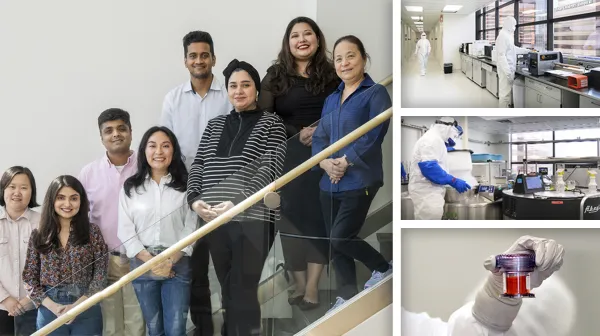
Most of our patients are involved in a clinical trial or study. With over 250 active therapeutic clinical trials, our >350 researchers and 47 laboratories are pioneering the translation of discoveries to the clinic. As part of larger teams, our experts collaborate with the pharmaceutical industry and participate in major pediatric cancer and blood disorder cooperative clinical trial groups, like the Children’s Oncology Group (COG). See below for our current and featured trials.
C7R-GD2.CAR T Cells for Patients with GD2-expressing Brain Tumors (GAIL-B)

In this study, a new gene will be added to the GD2 T cells that can cause the cells to live longer. T cells need substances called cytokines to survive. The gene C7R has been added that gives the cells a constant supply of cytokine and helps them to survive for a longer period of time.
Read MoreGD2 Specific CAR and Interleukin-15 Expressing Autologous NKT Cells to Treat Children With Neuroblastoma (GINAKIT2)
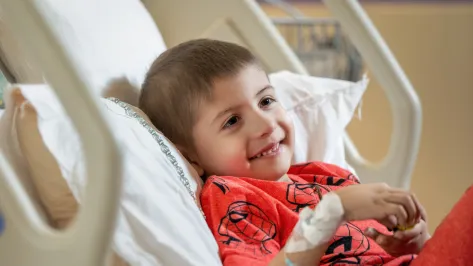
This research study combines two different ways of fighting cancer: antibodies and Natural Killer T cells (NKT).
Read MoreVinblastine/Prednisone versus Single Therapy with Cytarabine for Langerhans Cell Histiocytosis (LCH)

The purpose of this research study is to compare previously used vinblastine/prednisone to single therapy with cytarabine for LCH.
Read MoreCD30 CAR T Cells, Relapsed CD30 Expressing Lymphoma (RELY-30)
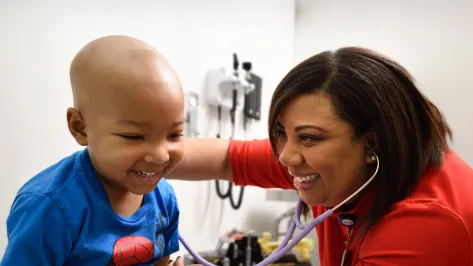
Investigators have found from previous research that they can put a new gene into T cells that will make them recognize cancer cells and kill them. They now want to test whether these genetically modified T cells given after chemotherapy will be more effective at killing cancer cells.
Read MoreAutologous T-Cells Expressing a Second Generation CAR for Treatment of T-Cell Malignancies Expressing CD5 Antigen (MAGENTA)
In this study investigators will attach the CD5 chimeric receptor with CD28 added to it to the patient's T cells or the previous bone marrow transplant donor's T cells. The investigators will then test how long the cells last.
Read MoreTrivalent CAR-T Cell in Acute B-Lineage Leukemia (TRICAR-ALL)
The antibody used in this study targets CD19, CD20 and CD22. This antibody sticks to ALL cells because of a substance on the outside of these cells called CD19, CD20 and/or CD22. For this study, the antibody to CD19, CD20 and CD22 has been changed so that instead of floating free in the blood, it is now joined to the T cells.
Read MoreHER2 Chimeric Antigen Receptor (CAR) T Cells in Combination with Checkpoint Blockade in Patients With Advanced Sarcoma (HEROS 3.0)

The purpose of this study is to learn whether it is safe to give HER2-CAR T cells in combination with an immune checkpoint inhibitor drug (pembrolizumab or nivolumab), to learn what the side effects are, and to see whether this therapy might help patients with sarcoma.
Read MoreCobimetinib in Refractory Langerhans Cell Histiocytosis (LCH), and Other Histiocytic Disorders (NACHO COBI)

The purpose of this research study is to learn whether cobimetinib is safe and effective in subjects diagnosed with LCH, LCH-ND, RDD, JXG and ECD which may have a specific mutation called BRAF-V600E.
Read MoreCell Therapy for High Risk T-Cell Malignancies Using CD7-Specific CAR Expressed On Autologous T Cells (CRIMSON)
In this study, investigators attach the CD7 chimeric receptor with CD28 added to it to T cells. Investigators will then test how long the cells last.
Read MoreStudy Assessing the Efficacy, Safety and Pharmacokinetics of Alpelisib in Pediatric and Adult Patients with PIK3CA-related Overgrowth Spectrum (PROS)

This study is designed to demonstrate the efficacy and assess safety and tolerability of oral daily alpelisib in participants with PIK3CA-related overgrowth spectrum (PROS).
Read MoreHarmony-HHT: a Proof-of-Concept Study of ATV-1601 in Participants with Hereditary Hemorrhagic Telangiectasia (HHT)

This is a 2-part study evaluating ATV-1601, an investigational oral precision therapy that selectively inhibits the AKT1 protein, in participants with moderate to severe HHT.
Read MoreStudy to Investigate Efficacy and Safety of KP-001 in Patients Aged ≥2 Years with Common Venous Malformations, Common Lymphatic Malformations, or KTS/CLOVES Syndrome (S-KY)

The purpose of this study is to measure the efficacy and safety of KP-001 (serabelisib), an investigational oral medication, compared with placebo in patients aged ≥2 years with common VM, common LM, or KTS/CLOVES syndrome.
Read More(INCITE-ON) NKG2D.Zeta-NK Cell Conditioning With C7R.GD2.CAR-T Cells for Patients With Relapsed or Refractory Osteosarcoma or Neuroblastoma

The purpose of this study is to find the largest safe dose of i15.NKG2D.zeta-NK cells in combination with C7R.GD2.CAR-T cells, and additionally to evaluate how long they can be detected in patients' blood and what affect they have on patients' cancer.
Read MoreRobust Armored Dual-Cytokine (IL-15/IL-21) GPC3-CAR T Cells for Atypical Teratoid Rhabdoid Tumors and Central Nervous System Rhabdoid Tumors (RADIANT)

This study is being conducted in patients with GPC3-positive brain tumors (atypical teratoid rhabdoid tumors and central nervous system rhabdoid tumors) that have recurred or have not responded to standard therapy.
Read MoreGPC-3 Chimeric Antigen Receptor T Cells for Recurrent GPC-3 Positive Glioblastoma

This study will test T cells genetically engineered with a GPC3-CAR and IL15 (GO-CART T cells) in participants with GPC3-positive brain tumors.
Read MoreImmunotherapy for Adults with GPC3-Positive Solid Tumors Using Interleukin-15 and -21 Armored Glypican-3-Specific Chimeric Antigen Receptor Expressing Autologous T Cells

This study will use therapeutic cells, called 21.15.GPC3-CAR T cells, to treat patients with solid tumors that have GPC3 on their surface.
Read MoreInterleukin-15 and -21 Armored Glypican-3-specific Chimeric Antigen Receptor Expressing Autologous T Cells as an Immunotherapy for Children with Solid Tumors (CARE)

Patients may be considered if the cancer has come back, has not gone away after standard treatment or the patient cannot receive standard treatment. This research study uses special immune system cells called CARE T cells, a new experimental treatment.
Read MoreTCH Histiocytosis Biology Study (H-25667)

This study seeks to understand the biology of histiocytic disorders by analyzing tissue and clinical data from patients with histiocytic disorders.
Read MoreNACHO-BIO: Biology Study for Histiocytic Disorders
This study collects biological samples from patients with histiocytic disorders to understand the disease’s biology and identify biomarkers that could improve future diagnosis and treatment.
Read MoreA Study With Tovorafenib (DAY101) as a Treatment Option for Progressive, Relapsed, or Refractory Langerhans Cell Histiocytosis
This phase II trial tests the safety, side effects, best dose and activity of tovorafenib (DAY101) in treating patients with Langerhans cell histiocytosis that is growing, spreading, or getting worse (progressive), has come back (relapsed) after previous treatment, or does not respond to therapy (refractory).
Read MoreRelapsed and Progressive Sonic Hedgehog Medulloblastoma With U1 Mutation Registry Study

The purpose of this study is to create a biobank for patients diagnosed with Sonic Hedgehog Medulloblastoma at Baylor College of Medicine/Texas Children's Cancer Center.
Read MoreTETRAVI Multivirus CTL for Treatment of EBV, CMV, Adenovirus, and BK Infections Post Allogeneic SCT (TETRAVI)

The purpose of this study is to use VSTs (virus-specific T cells) from a donor that is a partial HLA (human leukocyte antigen) match with the patient to treat viral infections after an allogeneic hematopoietic stem cell transplant (HSCT). These cells may also have value in CAR-T recipients who have received a product that depletes virus specific T cells.
Read MoreEBV Specific T Lymphocytes for Treatment of EBV-Positive Lymphoma (CILESTE)
The purpose of this study is to find the largest safe dose of C7R-EBV T cells, and additionally to evaluate how long they can be detected in the blood and what affect they have on cancer.
Read MoreConstitutive IL7R (C7R) Modified Banked Allogeneic CD30.CAR EBVSTS for CD30-Positive Lymphomas (CABAL2)

The aim is to study the safety and effectiveness of allogeneic banked CD30.CAR-EBVST cells that also carry the C7R molecule, to learn the side effects of C7R modified CD30.CAR-EBVST cells in lymphoma patients, and to see whether this therapy may help them.
Read MoreAllogeneic CD30.CAR-EBVSTs in Patients with Relapsed or Refractory CD30-Positive Lymphomas

The purpose of this study is to find out the highest safe dose of allogeneic CD30.CAR-EBVST cells given following chemotherapy and used to treat lymphoma. The investigators will learn the side effects of CD30.CAR-EBVST cells in patients and see whether this therapy may help lymphoma patients.
Read MoreUPDATE AML: A New Chemotherapy Approach for Pediatric Acute Myeloid Leukemia

This research study investigates the tolerability of substituting two cycles of chemotherapy into the standard pediatric acute myeloid leukemia (AML) chemotherapy treatment regimen for patients with newly diagnosed AML at intermediate-risk (IR) and high-risk (HR) of relapse.
Read MoreA Phase 2 Study of Mutant-selective PI3Kα Inhibitor, RLY-2608, to treat PIK3CA Related Overgrowth Spectrum (PROS) and Malformations Driven by PIK3CA Mutation

This is a 3-part Phase 2 randomized study evaluating the safety and efficacy of the mutant-selective PI3Kα inhibitor, RLY-2608, in adults and children with PIK3CA Related Overgrowth Spectrum (PROS) and malformations driven by PIK3CA mutation.
Read MoreA Phase 3 Study Evaluating QTORIN 3.9% Rapamycin Anhydrous Gel in the Treatment of Microcystic Lymphatic Malformations (SELVA)
The main purpose of this study is to assess the change in microcystic lymphatic malformations IGA after 24 weeks of treatment with QTORIN 3.9% Rapamycin Anhydrous Gel in approximately 40 participants with microcystic lymphatic malformations.
Read MoreAlpelisib in Pediatric and Adult Patients with Lymphatic Malformations Associated with a PIK3CA Mutation (EPIK-L1)
The main purpose of this study in participants with PIK3CA-mutated LyM is to assess the change in radiological response and symptom severity upon treatment with alpelisib film-coated tablets (FCT) as compared to placebo.
Read MoreA Study of the Safety and Tolerability in Participants With PIK3CA-related Overgrowth Spectrum or Proteus Syndrome Who Are Being Treated With Miransertib (MK-7075) in Other Studies (MK-7075-006)
This is a study of the safety and tolerability of oral miransertib (MK-7075) administered to participants at least 2 years of age with phosphatidylinositol-4,5-bisphosphate 3-kinase catalytic subunit alpha (PIK3CA)-related overgrowth spectrum (PROS) or Proteus Syndrome (PS).
Read MoreStudy Assessing the Efficacy, Safety and PK of Alpelisib (BYL719) in Pediatric and Adult Patients With PIK3CA-related Overgrowth Spectrum (EPIK-P2)

Study assessing the efficacy, safety, and PK of alpelisib in patients with PIK3CA-related overgrowth spectrum.
Read MoreA Study to find the Highest Dose of Imetelstat in Combination with Fludarabine and Cytarabine for Patients with AML, MDS or JMML That Has Come Back or Does Not Respond to Therapy (PEPN2312)
This phase I trial tests the safety, side effects, and best dose of imetelstat in combination with fludarabine and cytarabine in treating patients with acute myeloid leukemia (AML), myelodysplastic syndrome (MDS) or juvenile myelomonocytic leukemia (JMML) that is refractory or recurrent.
Read MoreImmunotherapy For Adults With GPC3-Positive Solid Tumors Using IL-15 and IL-21 Armored GPC3-CAR T Cells

This study will test the effect of 21.15.GPC3-CAR T cells in patients with solid tumors that express GPC3 on their surface.
Read MoreStudy of Onivyde With Talazoparib or Temozolomide in Children With Recurrent Solid Tumors and Ewing Sarcoma (ONITT)
The trial will test 2 combinations of therapy and participants will be randomly assigned to either Arm A or Arm B. The purpose of the phase I study is to determine the highest tolerable doses of the combinations of treatment given in each Arm.
Read MoreOpen-label Study of ELA026 in Participants with Secondary Hemophagocytic Lymphohistiocytosis (sHLH)

The purpose of this study is to assess the safety, efficacy pharmacokinetics and pharmacodynamics of ELA026 in participants with sHLH.
Read MoreHER2-specific Chimeric Antigen Receptor (CAR) T Cells for Children with Ependymoma (PBTC-059)

This is a Phase I study to evaluate the safety profile of a type of immune therapy called HER2 CAR T cells. In addition to looking for side effects, we will study how well this treatment works against a brain tumor called ependymoma that has come back after treatment (recurrent) or has not responded well to treatment (progressive) in children.
Read MoreFor a complete list of clinical trials offered at Texas Children's Hospital, visit clinicaltrials.gov

Leading in Cancer
Proud to be recognized by U.S. News & World Report as one of the country's top children’s cancer centers
Explore more
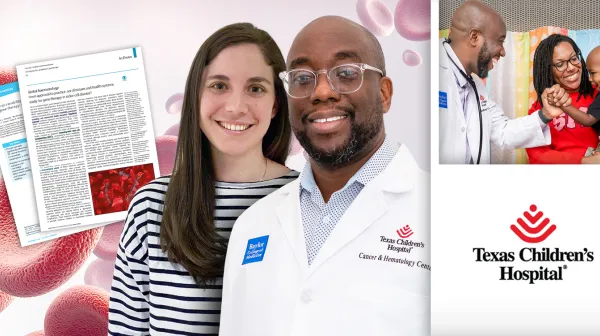
Texas Children’s Researchers Outline Path to Broader Sickle Cell Gene Therapy Access
HCP Live with Dr. Jacquelyn Powers: Why "Normal" Ferritin Can Miss Iron Deficiency
hcplive.com

Texas Children’s Dr. Michael Taylor Honored by CPRIT for Advancing Childhood Brain Tumor Research


Study Reveals Distinct Genetic Patterns of Germline Cancer Risk and Somatic Tumor Variants