
Cell Therapy and Bone Marrow Transplant Program
Immune Disorders and Bone Marrow Transplantation

Texas Children’s Cell Therapy and Bone Marrow Transplant Program is a national referral center for children with primary immunodeficiencies, immune dysregulation syndromes, and other severe immune disorders requiring stem cell transplant or advanced cellular therapy.
We care for some of the most medically complex patients with rare immunologic disorders—often with active infections and/or multi-organ involvement—by pairing deep transplant expertise with one of the country’s most established pediatric immunology programs.
This program was designed to address the needs of children with immune disorders who need specialized, coordinated care before, during, and after stem cell transplantation. This multidisciplinary approach represents the state-of-the-art management for treating these unique conditions.
Why Choose Texas Children’s for Immune Disorder Stem Cell Transplantation?
Experience and volume matter in immune deficiency transplantation.
Our program is recognized for:
- Being the #1 pediatric transplant program in the Southwestern U.S., performing 140+ bone marrow transplants and cell and gene therapy infusions each year, including both autologous and allogeneic procedures
- Performing transplants using all donor sources, including matched related, matched unrelated, haploidentical (half matched), and cord blood
- Deep, long standing integration with pediatric immunology, ensuring seamless care across the full patient journey
- Care delivered within one of the largest children’s hospitals in the United States, providing immediate access to any subspecialty required to manage complex immune disorders
These strengths allow us to move forward with transplant even in medically fragile patients—when timing, coordination, and expertise are critical.

Our program also works in close alignment with the National Marrow Donor Program (NMDP) to support donor access and referral pathways for children with immune disorders who lack matched donors.
Transplant Care Integrated with Immunology Expertise
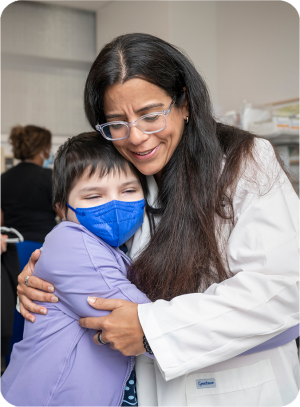
Children with immune disorders are managed through a combined Immunology and Bone Marrow Transplant clinical model, designed to support patients across every phase of care:
- Pre-transplant: Joint evaluation with immunology, infectious disease, pulmonary, gastroenterology, and other subspecialists to stabilize infections and immune-mediated complications
- During transplant: Dedicated immunology involvement to guide infection management, immune reconstitution, and response to complications in close coordination with the transplant team
- Post-transplant and long-term follow-up: Ongoing immunology care immediately after transplant and through long-term survivorship, including annual follow-up
This structure reflects the current reality of immune deficiency care and allows for early intervention, individualized treatment planning, and long-term immune health monitoring.
Immune Disorders We Treat
Our team provides transplant and cellular therapy for a wide range of nonmalignant immune disorders, including:
- Severe combined immunodeficiency (SCID)
- Other primary immunodeficiencies
- Immune dysregulation and immune regulatory disorders
- Inherited bone marrow failure syndromes associated with immune dysfunction
Patients are frequently referred to us with active, life-threatening infections, inflammatory bowel disease, or immune-mediated pulmonary disease—conditions that require coordinated subspecialty management prior to and during transplant.
Outcomes from our immune disorders transplant program are reported to and benchmarked through the Center for International Blood and Marrow Transplant Research (CIBMTR), supporting national research collaboration, outcomes analysis, and continuous quality improvement in pediatric immune disorder transplantation.
Managing the Most Complex Immune Patients Through Multidisciplinary Care
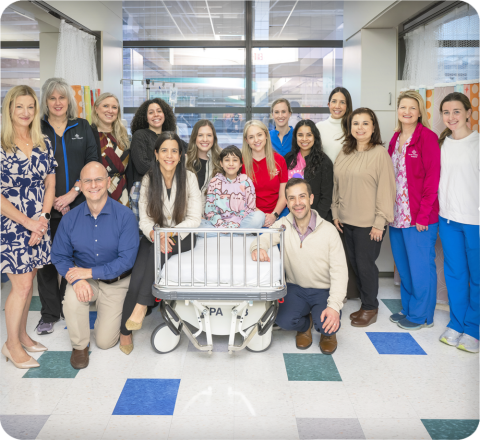
Children with immune disorders often face challenges that complicate transplant readiness. Our program is intentionally structured to manage the highest-risk immune patients through a tightly integrated, multidisciplinary care model.
This approach includes formal collaboration across key pediatric subspecialties that are essential to immune deficiency care:
- Immunology, embedded across pre- and post-transplant care
- Infectious Disease, to control active or recurrent infections before and during transplant
- Gastroenterology, for immune-mediated enteropathy and inflammatory bowel disease
- Pulmonary, to manage immune-mediated lung disease and complications from chronic infections
Because these specialists work alongside the transplant team as part of a unified program, many children—who might otherwise be considered too high-risk—are able to proceed safely to transplant.
This model allows for early intervention, coordinated decision-making, and rapid response to complications throughout the transplant journey.
Research and Leadership in Immune Disorder Transplantation
Texas Children’s is a national leader in cord blood transplantation for nonmalignant disorders, with a particular emphasis on immune deficiencies. Our work has helped establish cord blood transplant as a critical option for patients who lack matched donors.
Our leadership includes:

- Cord blood transplantation for immune deficiencies, including SCID, chronic granulomatous disease (CGD), Wiskott–Aldrich syndrome (WAS), and primary immune regulatory disorders (PIRDs)
- Standard of care for many patients without matched donors, particularly children from underrepresented populations
- Landmark outcomes, including a 91% two-year survival rate in a prospective study using cord blood transplantation without serotherapy
(Martinez et al., 2023; Blood Advances PMID: 36453638) - Innovative clinical protocols that replace serotherapy with fludarabine-based conditioning to reduce toxicity, improve immune recovery, and lower rates of graft versus host disease and severe infections
Through clinical research and national collaboration, our program continues to advance safer, more effective transplant strategies for children with severe immune disorders.
Learn More About the Cell Therapy & BMT Program
Care for immune disorders is one part of Texas Children’s broader program. To learn more about our complete transplant services, including cellular therapies, gene therapy, and transplantation for other conditions, visit the Cell Therapy and Bone Marrow Transplant Program page.
Explore more

Health Briefs
Jul 31, 2026
Texas Children's Cancer and Hematology Center Hosts Alex's Lemonade Stand Event

For Physicians
Jun 30, 2026
For Physicians
Jun 30, 2026