Nature Publication Uncovers Why PFA Ependymoma Occurs More Often in Boys
Research


A new study published in the prestigious journal Nature is shedding light on a long‑standing clinical observation in pediatric neuro‑oncology: posterior fossa type A (PFA) ependymoma, an aggressive brain tumor affecting infants and young children, occurs more commonly in boys than in girls. The findings of this study provide a biological explanation for this difference and point toward a promising new direction for targeted treatment development.
PFA ependymoma is a rare tumor that lacks the recurrent genetic mutations typically used to guide precision oncology approaches. Although both boys and girls can develop PFA, boys are approximately 40% more likely to be diagnosed. Until now, the biological basis for this difference has remained unclear.
In this study, researchers at Texas Children’s Hospital and Baylor College of Medicine, working with an international team of collaborators, examined how sex‑specific developmental influences shape PFA biology. Their goal was to determine whether differences in tumor behavior were driven by sex chromosomes or by hormonal factors — and, if hormones were responsible, to assess whether blocking those signals could impact tumor growth.
By analyzing primary PFA tumor samples alongside embryonic hindbrain developmental models, investigators found that androgens — hormones more prevalent in male infants — play a central role in promoting PFA growth. The study revealed that androgen exposure keeps tumor cells in a less‑developed, more growth‑prone state, leading to more aggressive tumor behavior.
Read the full study: https://www.nature.com/articles/s41586-026-10264-6
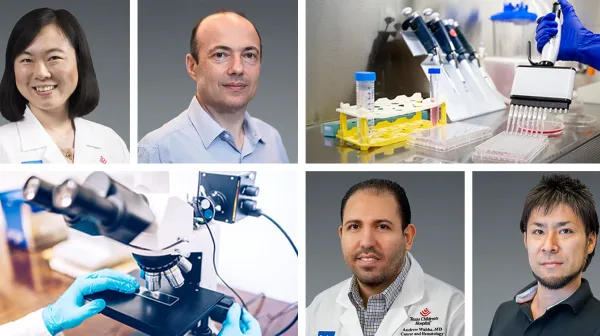
The study was led by first authors (pictured left column, top to bottom) Jiao Zhang, PhD; Winnie Ong, PhD; and Alexandra Rasnitsyn, PhD, alongside corresponding authors (pictured right column, top to bottom) Michael D. Taylor, MD, PhD; Kulandaimanuvel Antony Michealraj, PhD; and Claudia L. Kleinman, PhD.
Building on their findings, the team also demonstrated that blocking androgen signaling slows tumor growth, indicating that androgen‑blocking therapies may represent a viable therapeutic strategy. Because androgens are present in both males and females, this approach could potentially benefit all children with PFA.
“Our study provides a biological explanation for why PFA ependymoma has a markedly higher incidence and worse prognosis in boys than in girls.” — Dr. Jiao Zhang
“These findings suggest that androgen‑blocking therapies may represent a rational direction for future targeted treatment strategies.” — Dr. Michael D. Taylor
This project was led by Texas Children’s Cancer & Hematology Center and Baylor College of Medicine, in collaboration with researchers from The Hospital for Sick Children, University of Toronto, University of Pittsburgh School of Medicine, McGill University, and many additional international partners. The full list of contributors is available in the publication.
This research was supported by organizations including the National Institutes of Health, Stand Up To Cancer, the Canadian Institutes of Health Research, the National Cancer Institute, the Terry Fox Research Institute, and several others. The full list of contributors is available in the publication.
See Jiao Zhang’s Texas Children’s profile here.
See Michael Taylor’s Texas Children’s profile here.